Why Travel Document Management Fails Without Clear Ownership (And How Teams Fix It)
Travel document management often fails due to unclear ownership. Learn how teams ensure passports, visas, and requirements are handled before deadlines.
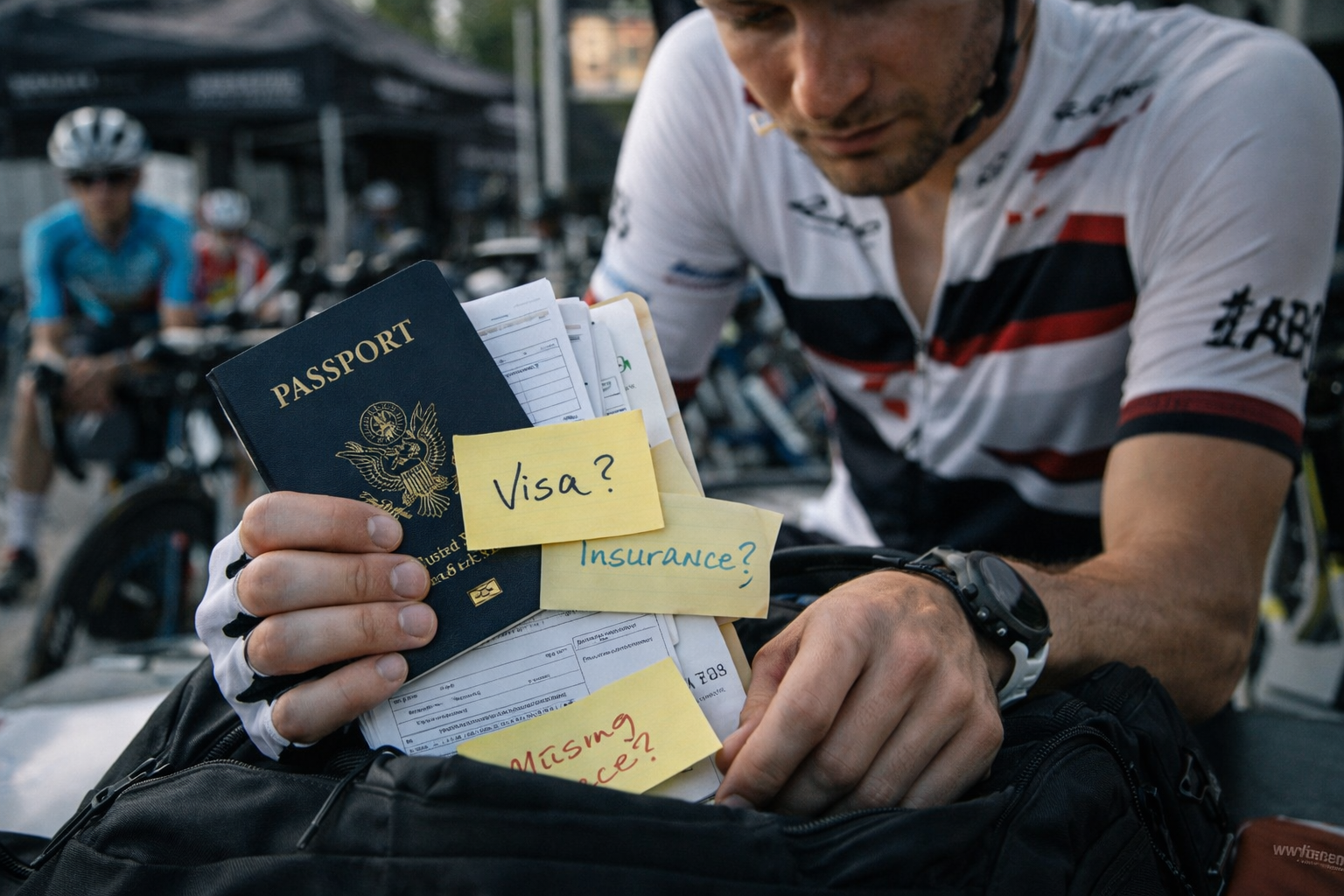
In teams that operate internationally, travel document management is rarely treated as a core discipline. In professional sports, riders focus on performance. In corporate environments, employees focus on their roles. In film and TV production, crews focus on delivery timelines. Travel documents sit in the background, assumed to be "handled."
Until they're not.
Across industries, the same pattern repeats. Passports are submitted late. Visa applications start too close to departure. Documents are missing, outdated, or incomplete. What should be a routine process turns into last-minute coordination under pressure.
The issue is not awareness. It is ownership.
Where travel readiness actually breaks down
Most teams don't fail because they don't know travel documents matter. They fail because responsibility is unclear.
Who is accountable for ensuring a passport is valid for the next trip? Who is responsible for checking visa requirements? Who makes sure documents are submitted on time?
In many cases, the answer is "someone else."
Operations managers or coordinators end up absorbing that responsibility by default. They chase riders, employees, or crew members for documents, send repeated reminders, and try to assemble a complete picture from partial information.
This creates a fragile system. It works only as long as someone is actively pushing it forward.
As soon as timelines tighten or complexity increases, gaps appear.
The limits of chasing people
Chasing documents does not scale.
In small teams or infrequent travel scenarios, manual follow-ups may be manageable. But as soon as travel becomes frequent, international, and multi-country, this approach breaks down.
A single missing document can delay an entire process. A late passport renewal can invalidate travel eligibility for multiple destinations. A visa requirement identified too late can create constraints that are difficult or impossible to resolve quickly.
The operational cost is not just time. It is uncertainty.
And uncertainty is what teams cannot afford when travel is tied to performance, business outcomes, or production schedules.
Making readiness visible to everyone
The first step toward fixing this is visibility.
When individuals can see their own travel readiness status — which documents are valid, which are expiring, and what is missing — the dynamic changes. Responsibility becomes personal, not abstract.
Instead of relying on reminders from an operations manager, each person understands their current state in relation to upcoming travel.
This shift is subtle, but powerful. It removes ambiguity.
A passport expiry is no longer just a date in a system. It becomes a blocker for a specific trip. A missing visa is not a future concern. It is an immediate gap tied to a defined deadline.
Visibility turns information into action.
Timing is the real constraint
Most document issues are not caused by unwillingness. They are caused by timing.
People underestimate how long processes take. Visa applications require lead time. Passport validity rules vary by country. Some destinations require documents to be valid well beyond the travel dates.
Without structured timelines, teams operate reactively. They discover constraints when they are already close to departure, leaving limited room to respond.
A more effective approach is to anchor document readiness to actual travel plans. Deadlines are not arbitrary. They are derived from the requirements of each destination and the timeline of each trip.
When reminders are tied to these constraints and triggered early enough, teams move from last-minute reactions to controlled preparation.
Turning responsibility into a system
Clear ownership does not mean assigning more manual work. It means structuring the system so that responsibility is embedded into how it operates.
Each individual is responsible for their own documents, but within a framework that makes expectations clear and progress visible. Operations managers are no longer chasing inputs. They are monitoring readiness and intervening only when necessary.
This distinction matters.
In high-performance environments like the UCI WorldTour, global corporate teams, or international productions, the goal is not to eliminate coordination. It is to reduce unnecessary friction and focus attention where it adds value.
From reactive coordination to controlled readiness
When ownership, visibility, and timing are aligned, travel document management becomes predictable.
Teams no longer rely on last-minute checks or fragmented communication. They operate from a shared understanding of readiness, where each person knows what is required and when it needs to be done.
The result is not just fewer issues. It is a different way of working.
Operations teams shift from chasing documents to managing exceptions. Individuals take responsibility earlier. Travel becomes smoother, not because it is simpler, but because it is structured.
Built for teams that operate internationally
Onoria is designed to support this shift. It connects individuals, their documents, and travel requirements to upcoming trips and events, making readiness visible at both the individual and team level.
By structuring ownership and surfacing requirements in context, it allows teams to move away from reactive coordination and toward a system where travel readiness is continuously maintained.
For organizations operating across countries, this is what turns document management from a recurring problem into a controlled process.
See who's ready to travel — before every trip.
Add your travellers and trips, and Onoria flags expiring passports, missing visas, and entry requirements weeks ahead — not at the airport.